
Product Review
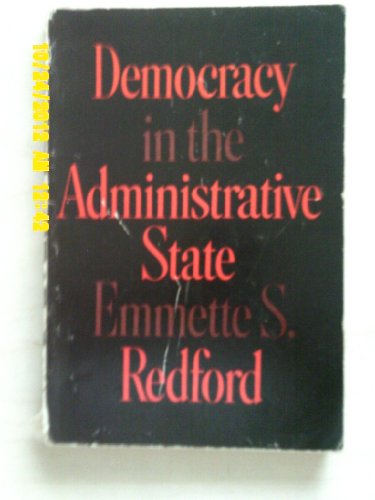
Democracy's prospects in a society where important decisions affecting individuals are made or carried out through public administrative bodies are the subject if this wide-ranging inquiry. Professor Redford initiates a stimulating discussion, offering fresh insights into those areas where democracy and administrations converge. He presents a model of multi-directional influences on administration and defines three levels of operative politics: micropolitics, in which individuals, companies, and communities seek benefits for themselves; subsystem politics; in which related administrative agencies, congressional committees, and external groups interact in specialized areas of public policy; and macropolitics, in which government leaders and the community at large are involved. Separate chapters focus on the problems of protecting persons as the subjects of administration and as workers in it. Addressing himself to the question of whether the administrative state can be legitimized through democratic control, the author asserts that we can hope strongly for workable democracy, "achievable under the conditions that have produced the administrative state." He finds it gratifying that hte key issues of democratic government are being discussed, and that the American system, in its broadest outlines, offer opportunities for a humane, open society in which administration is responsive to the interest of all. The volume is in the series, Public Administration and Democracy. , edited by Roscoe C. Martin, Maxwell Professor of Political Science, Syracuse University. Emmette S. Redford is Ashbel Smith Professor of Government at the University of Texas. He received his B.A. and M.A. from the University of Texas, and his Ph.D. From Harvard University. He is a past president of the American Political Science Association (1960-61) and has held appointments as administrator and consultant with various government agencies. (from back cover of this book)


