
Product Review
Though the number of women elected to the U.S. state legislatures has increased substantially in the last forty years, researchers still struggle to connect the presence of women in the legislature to public policy outcomes that affect women. One reason for this struggle is that we lack a complete understanding of how political parties modify the relationship between women legislators' interests in representing women and the creation of public policies that concern them.
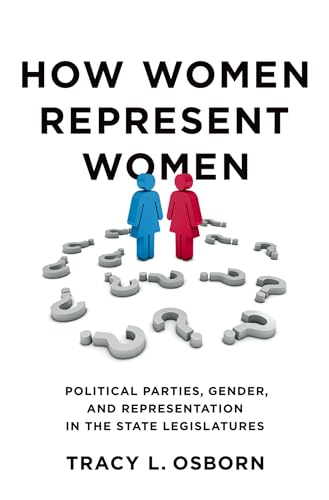
In How Women Represent Women: Political Parties, Gender and Representation in the State Legislatures, Tracy L. Osborn argues that political parties fundamentally shape the pursuit of women's policy issues in American politics. When women represent women, they do so as partisans.
Drawing on a comparative study of U.S. state legislatures using original election, sponsorship, and roll call data in nearly all ninety-nine state legislative chambers in 1999-2000, Osborn argues that political parties influence women legislators both on an individual and a structural level. First, women's party identities shape the types of alternatives they offer to solve women's policy problems. Second, parties, by holding majority control (to varying degrees) over agenda setting and policy creation, have the institutional ability to constrain and dictate which policy proposals have a chance to become laws.
How Women Represent Women provides a rigorous theoretical and practical understanding of what partisanship means and how parties fundamentally shape the pursuit of women's policy issues in American politics today.


