
Product Review
Faced with the possibility of being drawn into a war on several fronts, the United States sought to win Mexican support for a new strategy of Hemispheric Security, based on defense collaboration by governments throughout the Americas. U.S. leaders were concerned that Mexico might become a base for enemy operations, a scenario that, given the presence of pro-Axis lobbies in Mexico and the rumored fraternization between Mexico and Germany in World War I, seemed far from implausible in 1939–41.
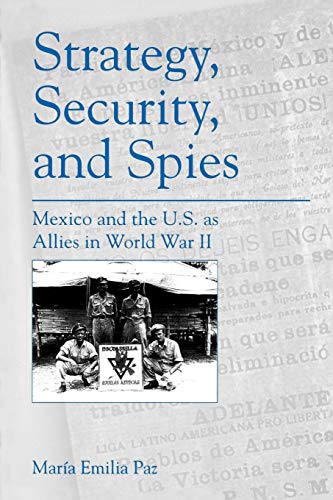
Strategy, Security, and Spies tells the fascinating story of U.S. relations with Mexico during the war years, involving everything from spies and internal bureaucratic struggles in both countries to all sorts of diplomatic maneuverings. Although its focus is on the interactions of the two countries, relative to the threat posed by the Axis powers, a valuable feature of the study is to show how Mexico itself evolved politically in crucial ways during this period, always trying to maintain the delicate balance between the divisive force of Mexican nationalism and the countervailing force of economic dependency and security self-interest.

