
Product Review
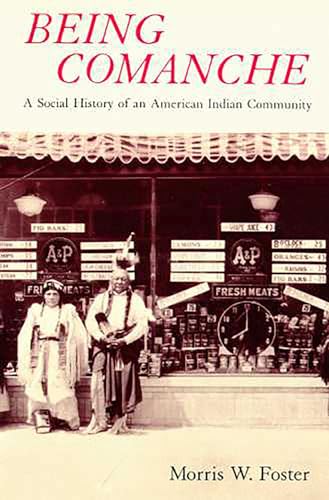
Comanches have engaged Euro-Americans' curiosity for three centuries. Their relations with Spanish, French, and Anglo-Americans on the southern Plains have become a highly resonant part of the mythology of the American West. Yet we know relatively little about the community that Comanches have shared and continue to construct in southwestern Oklahoma. Morris Foster has written the first study of Comanches' history that identifies continuities in their intracommunity organization from the initial period of European contact to the present day. Those continuities are based on shared participation in public social occasions such as powwows, peyote gatherings, and church meetings Foster explains how these occasions are used to regulate social organization and how they have been modified by Comanches to adapt them to changing political and economic relations with Euro-Americans. Using a model of community derived from sociolinguistics, Foster argues that Comanches have remained a distinctive people by organizing their face-to-face relations with one another in ways that maintain Comanche-Comanche lines of communication and regulate a shared sense of appropriate behavior. His book offers readers a significant reinterpretation of traditional anthropological and historical views of Comanche social organization.


