
Product Review
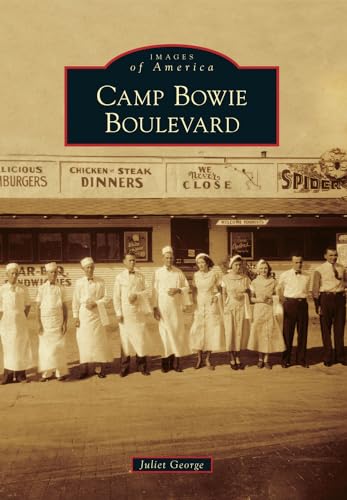
In the early 1890s, Humphrey Barker Chamberlin installed a lifeline to his namesake suburb west of the city. A trolley connected to Arlington Heights Boulevard at the Trinity River’s Clear Fork and chugged across prairie land to reach Chamberlin Arlington Heights. Camp Bowie, a soldiers’ city, sprawled over both sides of the road from 1917 until 1919. At the Great War’s end, the stretch west of present-day University Drive became the commemorative Camp Bowie Boulevard. The 1920s brought twin ribbons of cordovan-colored brick pavement, the prestige of inclusion in the Bankhead Highway network, and westering developers of another elite village: Ridglea. Midway through the Great Depression, the Will Rogers complex arose on a farm tract, visible from the thoroughfare, to host Texas Centennial celebrations and a special livestock exposition. Museums began claiming adjacent space in the 1950s. By the second decade of the 21st century, Camp Bowie Boulevard bisected a built environment both modern and historic.


