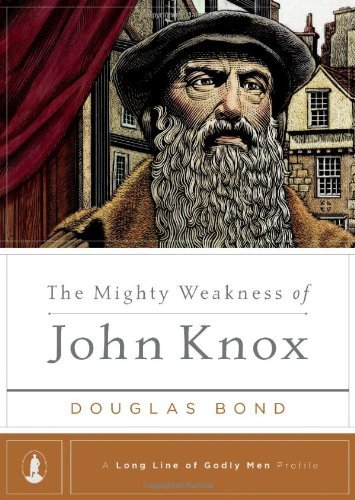

Product Review
Summary
John Knox, the great Reformer of Scotland, is often remembered as something akin to a biblical prophet born out of time strong and brash, thundering in righteous might. In truth, he was "low in stature, and of a weakly constitution," a small man who was often sickly and afflicted with doubts and fears. In The Mighty Weakness of John Knox, author Douglas Bond shows that Knox did indeed accomplish herculean tasks, but not because he was strong and resolute in himself. Rather, he was greatly used because he was submissive to God; therefore, God strengthened him. That strength was displayed as Knox endured persecution and exile, faced down the wrath of mighty monarchs, and prayed, preached, and wrote with no fear of man, but only a desire to manifest the glory of God and to please Him.
Chapters
- Knox's Life and Legacy
- The Power of a Christ-Subdued Life
- Power of Prayer
- Power of the Pulpit
- Power of the Pen
- Power of Predestination
- Empowering the Weak
- A Legacy of Strength
Resources and Tools
- Part of A Long Line of Godly Men Profile series
- Appendix A: Time Line
- Appendix B: The Scots Confession of Faith
- Notes
- Subject index
- Bibliography


