
Product Review
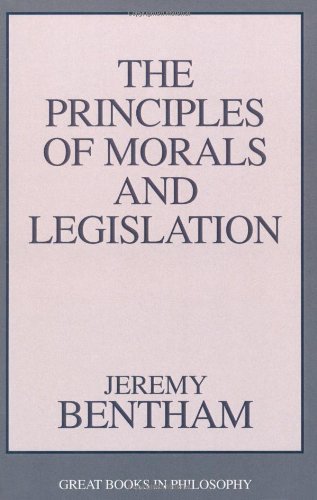
Jeremy Bentham's work on "The Principles of Morals and Legislation" emerges from its historic roots in hedonism and teleology as a scientific attempt to assess the moral content of human action by focusing on its results or consequences. Proceeding from the assumption that human beings desire pleasure (and avoid pain), Bentham's unique perspective, known as utilitarianism, is used to construct a fascinating calculus for determining which action to perform when confronted with situations requiring moral decision-making the goal of which is to arrive at the 'greatest happiness of the greatest number'. Toward this end, he endeavours to delineate the sources and kinds of pleasure and pain and how they can be measured when assessing one's moral options. Bentham supports his arguments with discussions of intentionality, consciousness, motives, and dispositions. Bentham concludes this groundbreaking work with an analysis of punishment: its purpose and the proper role that law and jurisprudence should play in its determination and implementation.Here we find Bentham as social reformer seeking to resolve the tension that inevitably exists when the concerns of the many conflict with individual freedom. This book offers readers the rare opportunity to experience one of the great works of moral philosophy, a volume that has influenced the course of ethical theory for over a century.


