
Product Review
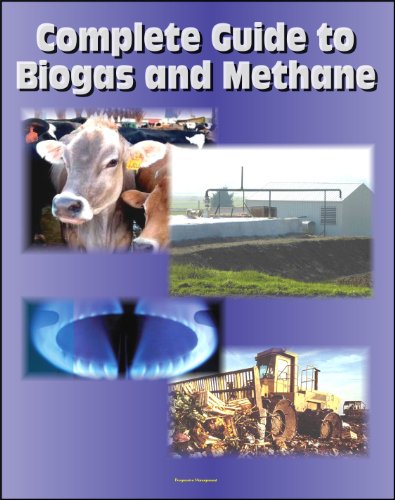
This unique ebook compilation, formatted for flowing-text reading, provides comprehensive coverage of all aspects of biogas, methane, farm recovery processes, manure digesters and processing, the AgSTAR program, landfill methane gas, and the Global Methane Initiative.
AgSTAR is focused on livestock producers (typically swine and dairy farms) for implementing methane recovery systems appropriate for confined livestock facilities that handle liquid or slurry manure. Gas recovery systems and digester technologies may provide enhanced environmental (air and water) and financial performance when compared to traditional waste management systems such as manure storages and lagoons. When livestock manure that is handled as a liquid or slurry decomposes anaerobically (without the presence of oxygen), it produces biogas. In waste management systems that are designed for treatment, such as digesters and anaerobic lagoons, biogas consists of about 60 to 70% methane and 30 to 40% carbon dioxide. When these gases are collected and transmitted to a combustion device, such as an electric generator, boiler, or absorption cooler, energy is produced. The captured biogas, which is 60 to 70 percent methane, can be used to generate electricity or replace fossil fuels for other energy needs.
Municipal solid waste (MSW) landfills are the third-largest source of human-related methane emissions in the United States, accounting for approximately 17 percent of these emissions in 2009. At the same time, methane emissions from landfills represent a lost opportunity to capture and use a significant energy resource. Landfill gas (LFG) is created as solid waste decomposes in a landfill. This gas consists of about 50 percent methane (the primary component of natural gas), about 50 percent carbon dioxide (CO2), and a small amount of non–methane organic compounds. Instead of escaping into the air, LFG can be captured, converted, and used as an energy source. Using LFG helps to reduce odors and other hazards associated with LFG emissions, and it helps prevent methane from migrating into the atmosphere and contributing to local smog and global climate change. LFG is extracted from landfills using a series of wells and a blower/flare (or vacuum) system. This system directs the collected gas to a central point where it can be processed and treated depending upon the ultimate use for the gas. From this point, the gas can be flared, used to generate electricity, replace fossil fuels in industrial and manufacturing operations, or upgraded to pipeline–quality gas where the gas may be used directly or processed into an alternative vehicle fuel.
The goals of the Global Methane Initiative (GMI), an international public-private partnership, are to reduce global methane emissions to fight climate change, enhance economic growth, strengthen energy security, and improve local environmental quality and industrial safety. Building on experience from the U.S. Environmental Protection Agency's (EPA's) successful domestic methane emission reduction programs, GMI brings together the public and private sectors to develop projects that can reduce emissions from the agriculture, coal mine, landfill, oil and gas systems, and municipal wastewater sectors. GMI was launched in 2010 based on the strong foundation of the accomplishments of the Methane to Markets Partnership, which was formed in 2004.


