Product Review
Tropical Hibiscus are the hallmarks of tropical landscapes. Hawaiian Sunset is an old cultivar, but lesser known cultivar. It is a sport (naturally ocurring spontaneous mutation) from the classic, popular favorite Florida Sunset.
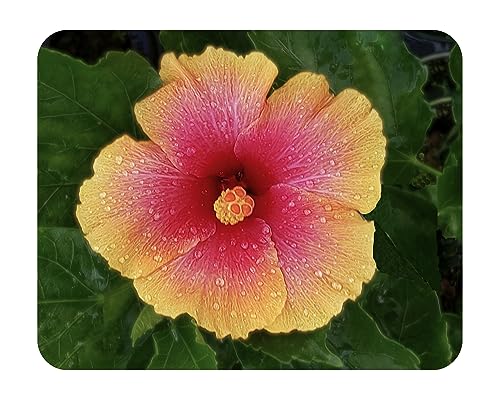
Striking single blooms in the bright hues of a tropical sunset with an attractive and distinctive trait of flattening, curving backward as they age grace a full, bushy upright growing, disease resistant plant with deep green pointed leaves with sharply serrated edges.
Plant in a well drained full sun location. Sunkist os a vigorous, easy to grow cultivar that works great for hedges and mass plantings, as an accent, or as a potted plant for the porch or patio.
Winter Hardy in Zones 10 & 11, and in Zone 9 with cold protection. Hibiscus can be grown as potted plants indefinitely and can be successfully wintered over indoors in cold climates when warm temps
- Hibiscus rosa-sinensis, or Tropical Hibiscus, is a large species of flowering, tropical shrub native to Asia and the South Pacific. There are thousands of variations of flower forms and colors available today. Some are hybrids with complex, fancy flowers that require extra care and vigilant attention, but there are also many that are tough, resilient flowering shrubs that need only the bare basics to thrive and bring an explosion of color to a tropical or sub-tropical garden.
- Hawaiian Sunset is an old heirloom Tropical Hibiscus Hybrid believed to result from a naturally occurring genetic mutation of Florida Sunset. The 5-inch single flowers are comprised of five elongated, overlapping petals that curve backward to display the colors of a tropical sunset, beginning with a fiery orange throat fading out to coral pink, then into a sunny golden yellow border.
- Care: When plants are mature and ready to be set out, plant in fertile, well-draining, acidic soil; water as needed to maintain consistent soil moisture, feed a good-quality, bloom-boosting fertilizer with the initial planting and annually in the Spring. Prune lightly and often after flowering. Protect from frost and freezing.
- Indoor Growing: Tropical Hibiscus do not adapt easily to indoor growing environments due to their specific needs for light, humidity, and temperature fluctuations. Successful indoor cultivation will require significant modifications to an average growing space.
- Climate: Hibiscus rosa-sinensis are tropical plants recommended for outdoor growing within USDA Growing Zones 9, 10, 11. Cold protection is recommended in all Zones for optimum appearance, earliest flowering, and overall plant health.