
Product Review
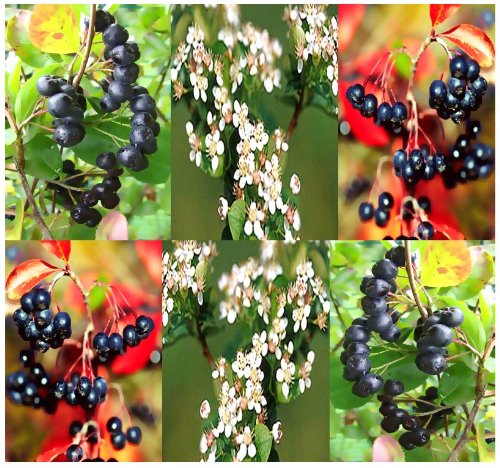
~ ~ ~ WE OFFER BOTH PKT. & BULK SIZES ~ ~ ~ .....Black chokeberry, Aronia melanocarpa (Photinia melanocarpa), rarely exceeding 1 m tall, rarely 3 m, and spreads readily by root sprouts. The leaves are smaller, not more than 6-cm wide, with terminal glands on leaf teeth and a glabrous underside. The flowers are white, 1.5 cm wide, with glabrous sepals. The fruit is black, 6-9 mm wide, not persisting into winter. The chokeberries are attractive ornamental plants for gardens. They are naturally understory and woodland edge plants, and grow well when planted under trees. Chokeberries are resistant to drought, insects, pollution, and disease. Several cultivars have been developed for garden planting, including A. arbutifolia 'Brilliant', selected for its striking fall leaf color.A. melanocarpa 'Viking' and 'Nero' were selected for larger fruit suitable for jam-making, and because they are self-fertile only one plant is needed to produce fruit. Antioxidant qualities Aronia melanocarpa (black chokeberry) has attracted scientific interest due to its deep purple, almost black pigmentation that arises from dense contents of phenolic phytochemicals, especially anthocyanins. Total anthocyanin content in chokeberries is 1480 mg per 100 g of fresh berries, and proanthocyanidin concentration is 664 mg per 100 g. Both values are among the highest measured in plants to date. Characteristics Medicinal Wildlife Food Flowering Shrub Edible Fruit/Nuts Fall Color Crop Plant Ornamental Fruit Ground Cover Growing Info: Scarification: Soak in water, let stand in water for 24 hours. Stratification: cold stratify for 90 -120 days. Germination: sow seed 1/16" deep, tamp the soil, mulch the seed bed

