
Product Review
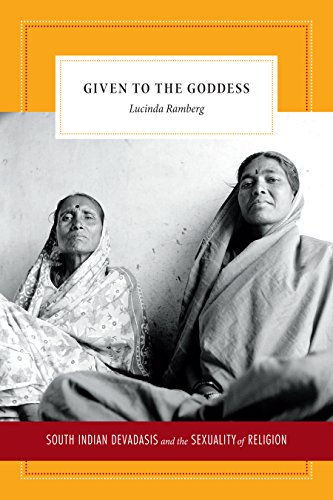
Who and what are marriage and sex for? Whose practices and which ways of talking to god can count as religion? Lucinda Ramberg considers these questions based upon two years of ethnographic research on an ongoing South Indian practice of dedication in which girls, and sometimes boys, are married to a goddess. Called devadasis, or jogatis, those dedicated become female and male women who conduct the rites of the goddess outside the walls of her main temple and transact in sex outside the bounds of conjugal matrimony. Marriage to the goddess, as well as the rites that the dedication ceremony authorizes jogatis to perform, have long been seen as illegitimate and criminalized. Kinship with the goddess is productive for the families who dedicate their children, Ramberg argues, and yet it cannot conform to modern conceptions of gender, family, or religion. This nonconformity, she suggests, speaks to the limitations of modern categories, as well as to the possibilities of relations—between and among humans and deities—that exceed such categories.

