Product Review
Aronia Melanocarpa / Black Chokeberry Genus - Aronia Species - Melanocarpa Common name - Black Chokeberry Other names - Chokeberry, Gueles Noires Pre-Treatment - Required Hardiness zones - 3 - 8 Height - 3'-6' / 0.9m - 1.8m Spread - 5'-10' / 1.5m - 3.0m Plant type - Small Shrub Vegetation type - Deciduous Exposure - Full Sun, Partial Sun, Partial Shade Growth rate - Medium Soil PH - Acidic, Neutral, Alkaline Soil type - Clay, Loam, Well drained Water requirements - Average Water Landscape uses - Foundation, Mixed Border, Edible Fruits Germination rate - 83% Leaf / Flower color - Green / White Plant growth rate - Medium
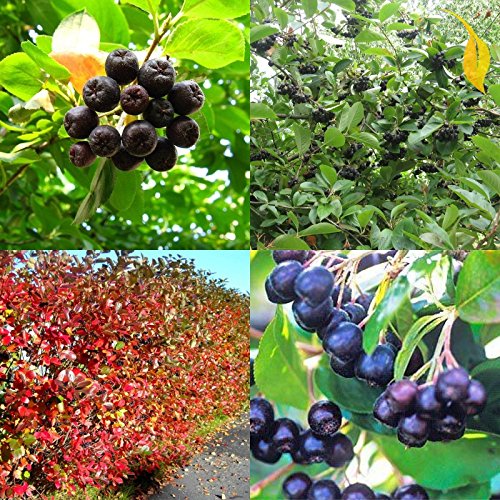
- Clusters of small,five-petaled white flowers appear in late spring and may have hints of pink. Bees pollinate the blossoms to form dangling clusters of purple-black berries that contrast with the gold, orange and orange-red leaves in fall. The fruits linger well into winter, finally being devoured by birds when other more tasty foods are gone.
- Small, pretty white blossoms in spring, orangey fall color and dark purplish-black berries make black chokeberry a great shrub for naturalistic massed plantings. An upright deciduous shrub that suckers to form a thicket of twigs and leaves, it is native to the moist soils of the eastern United States and a thin sliver of southeastern Canada. Individual plants have a cluster of many, thin, dark brown stems that have a white, waxy, semi-flaky film on the smaller, reddish-brown twigs. It is slightly shorter and denser in habit than its cousin, red chokeberry (A. arbutifolia).
- Perfect for full sun or partially shaded spots, black chokeberry is most prolific in moist, fertile, well-drained, acidic soils. However, it adapts to many soils and light exposures, and it will produce a sparser thicket if placed in drier or less humus-rich ground. Full sun guarantees best fruiting and brighter fall leaf color. Use it in naturalistic garden designs, or as an accent shrub in a mixed border. It works terrifically well as a riverbank stabilizer, or in any large-scale planting in which a billowing mass is needed, especially in roadside ditches or moist swales around paved lots. (Info source: Learn2Grow.com)