
Product Review
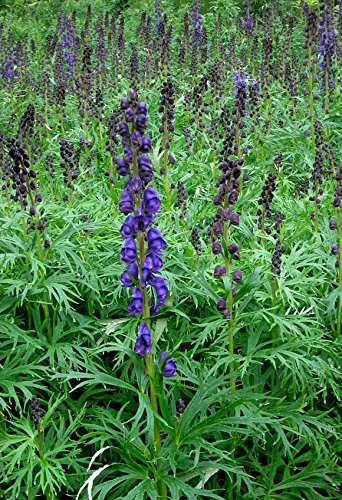
Warning: Keep it far away from areas where pets or children can enter or where edibles are being grown. Improper identification in the wild has lead to death by those who have mistaken it for an edible plant. Wolf Bane is highly poisonous. Growing Information: THE FIRST THING THAT SHOULD BE MENTIONED IS TO ALWAYS WEAR GLOVES WHEN HANDLING THE SEEDS OR PLANTS AND TO WASH YOUR HANDS IMMEDIATELY AFTERWARD. Toxins can leech through the skin, especially if you have any type of cut, so direct contact should be avoided. Aconitum Napellus seeds are stubborn germinators that require moist cold stratification. In areas where the winters freeze, the seeds can be sown outdoors in the winter and allowed to naturally face exposure to the weather changes. Given the germination time, this may actually be the easiest route to follow. Otherwise, the seeds should be started in plastic bags with either a damp paper towel, moist sand or moist rockwool. Do not entirely seal the plastic bags so that the seeds can get some oxygen. At first, the seeds will need a month at room temperature, followed by 6 weeks of freezing temperatures, eventually being placed in sterile soil at 40 degrees Fahrenheit until they germinate. Keep in mind that germination normally takes place over the course of an entire season (sometimes 2), so be patient and do not give up. This species likes a well-draining soil that is kept moist (no wet). Do not let the soil dry out, and it should have plenty of organic matter. Situate your plants in a final location that provides full sun to partial shade. Partial shade may actually be preferred. Monkshood is hardy in zones 4-8 and may possibly survive cooler climates than that. Once it has become well-established, it is possible to propagate the plant by division of the roots.


