
Product Review
Free E-Book wih Every Purchase
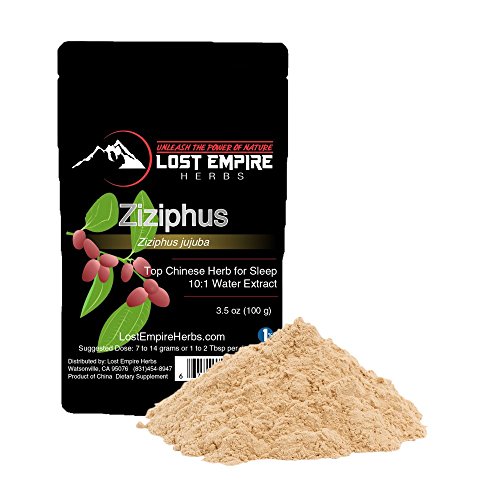
Ziziphus...The Top Chinese Herb for Sleep In the Chinese Medical system
Ziziphus is held to be the most sedative of the plants used. It is held in high regard for this effect, being the primary ingredient in many formulas that are geared towards insomnia. In fact, Xu Dachun, a Qing Dynasty physician claimed, "Everyone knows that one employs ziziphus and fu-shen if one can not sleep." Ziziphus is in the Buckthorn family, Rhamnaceae. It is actually technically a variation of another big herb, the jujube plant, designated by its Latin name of Ziziphus jujube var. spinoza or just Ziziphus spinoza. It is commonly also spelled zizyphus. The Chinese do not view Jujube and Ziziphus as mutually exclusive of each other however. Their name for ziziphus is suanzaoren, which can translate as sour date seed, or just zaoren. The name for jujube is dazao which can translate as large date. Though they are very similar in appearance, they may actually turn out to be different at the species level. This is the problem with classification systems, it not uncommon for what was once related species to become wholly distinct species or even separate genera as reclassification takes place with time and new insights. How Ziziphus Works on Sleep and Insomnia... It is believed that its sedative effects extend primarily from the high concentration of jujubesides. These triterpenoid saponins are found in many adaptogenic plants and are collectively thought to be why they are classified as such. An adaptogen works on the nervous system to modulate the stress response. While ziziphus is not classified as an adaptogen, its great sedative powers may stem from this fact. Ziziphus has been shown to increase the amount of REM sleep in individuals, though science cannot say either way if this is a good or bad thing.


