
Product Review
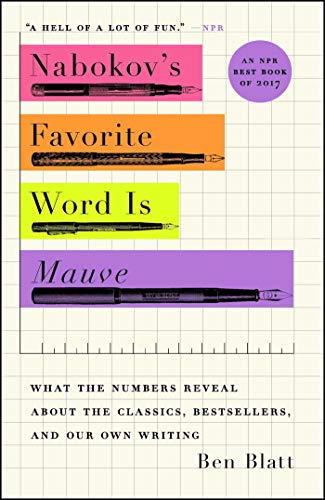
Data meets literature in this “enlightening†(The Wall Street Journal), “brilliant†(The Boston Globe), “Nate Silver-esque†(O, The Oprah Magazine) look at what the numbers have to say about our favorite authors and their masterpieces.
There’s a famous piece of writing advice—offered by Ernest Hemingway, Stephen King, and myriad writers in between—not to use -ly adverbs like “quickly†or “angrily.†It sounds like solid advice, but can we actually test it? If we were to count all the -ly adverbs these authors used in their careers, do they follow their own advice? What’s more, do great books in general—the classics and the bestsellers—share this trait?
In the age of big data we can answer questions like these in the blink of an eye. In Nabokov’s Favorite Word Is Mauve, a “literary detective story: fast-paced, thought-provoking, and intriguing†(Brian Christian, coauthor of Algorithms to Live By), statistician and journalist Ben Blatt explores the wealth of fun findings that can be discovered by using text and data analysis. He assembles a database of thousands of books and hundreds of millions of words, and then he asks the questions that have intrigued book lovers for generations: What are our favorite authors’ favorite words? Do men and women write differently? Which bestselling writer uses the most clichés? What makes a great opening sentence? And which writerly advice is worth following or ignoring?
All of Blatt’s investigations and experiments are original, conducted himself, and no math knowledge is needed to enjoy the book. On every page, there are new and eye-opening findings. By the end, you will have a newfound appreciation of your favorite authors and also come away with a fresh perspective on your own writing. “Blatt’s new book reveals surprising literary secrets†(Entertainment Weekly) and casts an x-ray through literature, allowing us to see both the patterns that hold it together and the brilliant flourishes that allow it to spring to life.


