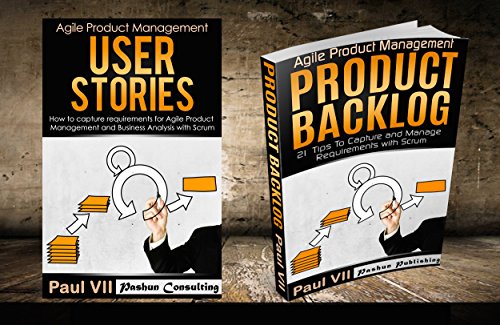

Product Review
Introduction
Thank you and congratulations on taking this class, “User Stories: How to capture, and manage requirements for Agile Product Management and Business Analysis with Scrumâ€.
In this class, you will be given proven methods to create, maintain and manage your requirements using user stories as part of an agile scrum team.
I know you will get value from this class as it gives you a full introduction to the concept of agile user stories for managing product requirements. I then walk you step by step through everything involved in managing requirements using user stories including writing, combining and splitting complex user stories. Following this, I give you a complete overview of epics and themes and how they can be used to capture and group complex requirements in any team or business. Along the way, I give you plenty of examples and give you best practices for working with user stories within agile scrum. In this class, you will learn:
•What User Stories are and why they are so powerful for capturing requirements in complex projects
•Feel confident in writing user stories for any project
•Understand what a Requirements Spec is and Why they are less flexible than a Product Backlog built with Agile User Stories
•Explain what The Three Rs rule, Acceptance Criteria, the INVEST Principle, the Three Cs principle and Edge Cases are and how they will make you a better user story writer or agile practitioner
•Understand how and when to split and amalgamate stories
•Learn techniques to help you to split user stories when working in the real world
•Understand the difference between Epics and Themes and when each is used
•Learn who is responsible for writing user stories in agile and scrum
So let’s get started and let me teach you how to improve product backlog management.
Table of Contents
Agile Product Management:1
User Stories:1
How to Capture Requirements for Agile Product Management and Business Analysis with Scrum1
Introduction
SECTION 1: The World Before User Stories (why do we need user stories anyway)
The History: Traditional Requirements Documents
Intro to Scrum and The Birth of User Stories
What is Agile Scrum?
Scrum Theory
Product Backlog
SECTION 2: User Story Principles
The INVEST Principle
The Three Cs Formula
SECTION 3: User Story basics (capturing a requirement)
How to write a User Story Description (using The Three Rs)
Who writes user stories?
User Stories – The Three Rs
How to write Acceptance Criteria (capturing the detail and any edge cases)
Acceptance Criteria
SECTION 4: Epics and Themes (capturing large or vague requirements)
What is an Epic?
What is a Theme?
When to split user stories
How to split User stories
BONUS: Example Backlog
Final Words
Conclusion
Free Scrum Ebook
Preview of ‘The Scrum Master Mega Pack’
Check Out My Other Books


